
Fix Your Process, Not Your Expectations
If your business isn't seeing results from content marketing, it's easy to assume the problem is the content itself.
"We need better posts."
"We need more videos."
"We need to be on a different platform."
While those things can help, they're often not the root issue.
More often than not, the real problem is the process behind the content.
The Content Consistency Problem
Many businesses approach content creation one post at a time.
Every week starts with the same questions:
What should we post today?
Do we have any photos?
Can someone create a graphic?
Do we have a video we can use?
This reactive approach creates a cycle of inconsistency. Content gets delayed, ideas run dry, and marketing becomes something that gets pushed aside when other priorities arise.
The result?
Inconsistent posting.
Limited visibility.
Little engagement.
And frustration when marketing efforts don't produce the desired results.
The challenge isn't always creativity.
It's often the lack of a repeatable process.
What Consistent Brands Do Differently
The businesses that consistently show up online aren't necessarily creating content every day.
They've simply built systems that make consistency easier.
Instead of scrambling to create content week by week, they batch their content production and build a library of assets that can be used across multiple channels and campaigns.
This approach reduces stress, improves quality, and creates a steady stream of content without requiring constant production.
What a Content System Looks Like in Practice
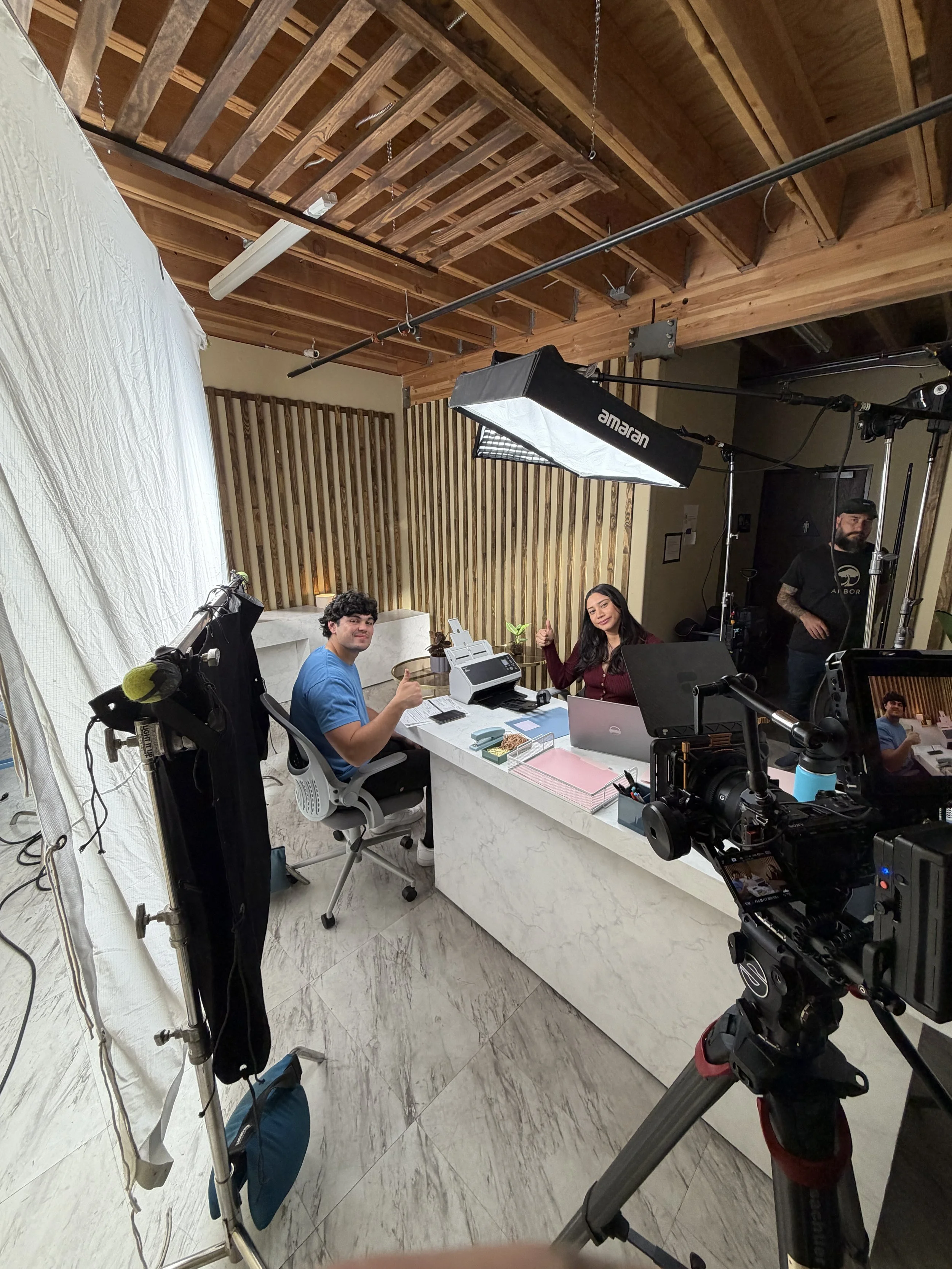
The photo above wasn't captured during a random social media post.
They were part of a larger content production process.
During this Ricoh and ScanSnap shoot, our team wasn't focused on creating a single piece of content. We were building an entire content library.
In one production day, we captured:
Product demonstrations
Feature highlight videos
Educational content
Product photography
Social media assets
Website visuals
Blog support content
Behind-the-scenes footage
Every setup was designed to create multiple content opportunities.
A single scene could become:
A social media post
A blog image
A product feature graphic
A short-form video
A website asset
A future campaign creative
That's the difference between creating content and building a content system.
A Real-World Example: Ricoh and ScanSnap
When we work with clients like Ricoh and ScanSnap, we focus on maximizing every production day.
Rather than creating one video and moving on, we capture enough assets to support weeks—or even months—of content.
The educational graphics, product demonstrations, social media posts, feature overlays, customer testimonials, and behind-the-scenes content all come from the same strategic production process.
This allows marketing teams to maintain consistency without constantly scrambling to create something new every week.
Why Process Matters More Than Content
When a strong process is in place:
Content becomes easier to produce
Teams spend less time searching for ideas
Marketing becomes more predictable
Content quality improves
Results compound over time
Without a process, even great content struggles because it isn't being delivered consistently enough to build awareness and trust.
If You're Feeling Stuck
If your content strategy feels stagnant, don't immediately ask:
"What should we post next?"
Instead ask:
"What process is preventing us from posting consistently?"
That question usually uncovers the real bottleneck.
The Bottom Line
Successful content marketing isn't built on occasional bursts of creativity.
It's built on systems.
The brands that stay visible aren't necessarily creating more content than everyone else.
They're simply creating content more strategically.
The behind-the-scenes photo and video from this Ricoh and ScanSnap shoot are a perfect example. What looks like one production day can fuel an entire marketing calendar when the right process is in place.
So if your business isn't getting the results you want, don't lower your expectations.
Fix your process first.
Because consistency isn't about working harder.
It's about creating a system that makes showing up easier.